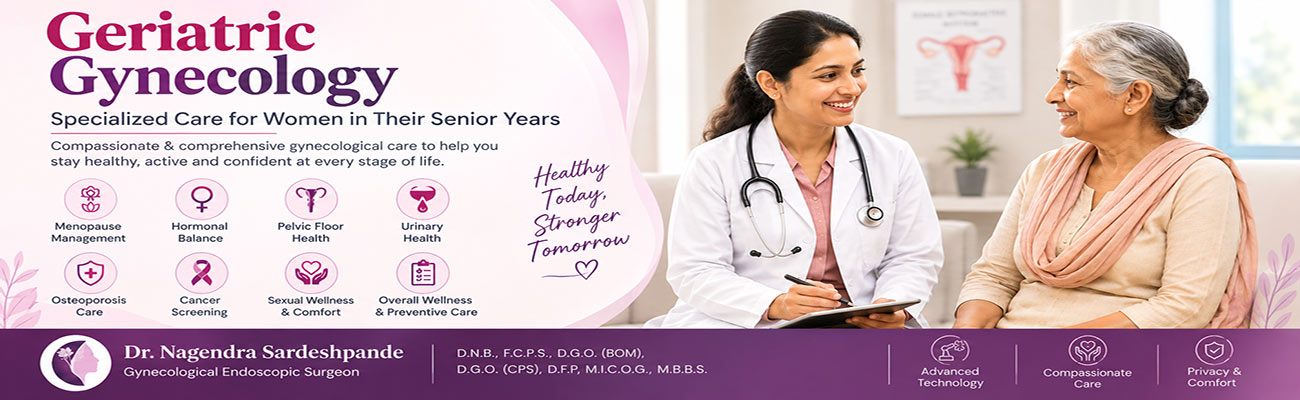
Geriatric Gynecology: Specialized Healthcare for Women in Their Senior Years
As women age, their healthcare needs evolve significantly. Geriatric gynecology is a specialized branch of gynecology dedicated to addressing the unique health concerns of women during their postmenopausal and senior years. From hormonal changes to pelvic floor disorders, osteoporosis, and cancer screening, comprehensive gynecological care plays a vital role in maintaining overall health and quality of life.
At Dr. Nagendra Sardeshpande's Clinic, we provide compassionate, evidence-based care tailored to the needs of senior women, helping them lead healthier, more active, and independent lives.
What is Geriatric Gynecology?
Geriatric gynecology focuses on the diagnosis, treatment, and prevention of gynecological conditions affecting women after menopause, typically from the age of 60 years onwards.
This specialty addresses age-related conditions that may affect:
- Reproductive organs
- Urinary system
- Pelvic floor
- Bone health
- Hormonal balance
- Sexual health
- Infection protection and, where possible, prevention
- Cancer prevention
Regular gynecological care remains essential even after menopause to ensure early detection and management of various health conditions.
Why is Geriatric Gynecology Important?
Many women mistakenly believe they no longer need to visit a gynecologist after menopause. However, regular gynecological check-ups remain important for:
- Early detection of gynecological cancers
- Management of urinary problems
- Treatment of vaginal dryness
- Pelvic organ prolapse care
- Osteoporosis prevention
- Sexual health support
- Overall wellness, vaccination guidance, and referral for other non-gynecological illnesses
Preventive care can significantly improve health outcomes and quality of life.
Common Gynecological Conditions in Elderly Women
1. Vaginal Dryness and Genitourinary Syndrome of Menopause (GSM)
Reduced estrogen levels after menopause can cause vaginal dryness, burning, itching, pain during intercourse, and frequent urinary infections. Treatment options may include vaginal moisturizers, lubricants, local estrogen therapy when appropriate, and other medical treatments recommended by your gynecologist.
2. Urinary Incontinence
Urinary leakage is common among older women and may occur while laughing, sneezing, exercising, or coughing. Treatment depends on the type and severity of incontinence and may include pelvic floor exercises, lifestyle modifications, medications, and advanced medical or surgical options when required.
3. Pelvic Organ Prolapse
Pelvic organ prolapse occurs when weakened pelvic floor muscles allow pelvic organs such as the bladder, uterus, or rectum to descend. Symptoms include a feeling of heaviness in the pelvis, a bulging sensation, difficulty passing urine, and discomfort while walking. Treatment options range from pelvic floor therapy and pessaries to surgery in selected cases.
4. Osteoporosis
After menopause, declining estrogen levels increase the risk of osteoporosis, making bones more fragile. Preventive measures include bone density screening, a calcium-rich diet, vitamin D supplementation, regular exercise, and medications when appropriate.
5. Gynecological Cancers
Senior women remain at risk for endometrial, ovarian, cervical, and vulvar cancer. Regular examinations and prompt evaluation of symptoms such as abnormal bleeding, pelvic pain, or unexplained weight loss are essential.
Preventive Health for Senior Women
Routine preventive care helps detect health problems early. Recommended evaluations may include:
- Pelvic examination
- Breast examination
- Cervical cancer screening as advised
- Bone density testing
- Blood pressure monitoring
- Diabetes screening
- Lipid profile
- Ultrasound when indicated
- Vaccination and guidance for preventive health checks with other specialities
Your doctor will recommend screenings based on your age, medical history, and individual risk factors.
Maintaining Sexual Health After Menopause
Many women remain sexually active after menopause. However, hormonal changes may lead to vaginal dryness, reduced elasticity, pain during intercourse, and reduced libido. Modern treatment options can help improve comfort and maintain intimate wellness. Open discussions with your gynecologist can help identify suitable treatment options.
Lifestyle Tips for Healthy Aging
Healthy habits play a significant role in maintaining overall well-being. Recommended lifestyle measures include:
- Balanced diet rich in fruits and vegetables
- Adequate calcium and vitamin D intake
- Regular physical activity
- Maintaining a healthy weight
- Quitting smoking
- Limiting alcohol consumption
- Stress management
- Regular medical check-ups
These measures support heart health, bone strength, and overall vitality.
When Should You Visit a Geriatric Gynecologist?
Consult your gynecologist if you experience:
- Postmenopausal bleeding
- Persistent pelvic pain
- Urinary leakage
- Vaginal dryness
- Frequent urinary tract infections
- Pelvic pressure or bulging
- Pain during intercourse
- Abnormal vaginal discharge
- Any new or unusual gynecological symptoms
Early diagnosis allows timely treatment and better outcomes.
Frequently Asked Questions
Do I still need to see a gynecologist after menopause?
Yes. Regular gynecological check-ups remain important for cancer screening, pelvic health, urinary problems, and overall wellness.
Is postmenopausal bleeding normal?
No. Any bleeding after menopause should be evaluated promptly, as it may indicate an underlying condition that requires medical attention.
Can urinary incontinence be treated?
Yes. Many treatment options are available depending on the type and severity of urinary incontinence.
Is osteoporosis preventable?
Although aging increases the risk, healthy lifestyle habits, regular screening, and appropriate treatment can help reduce the risk of osteoporosis and fractures.
Can elderly women undergo gynecological surgery safely?
When medically appropriate and after careful evaluation, many gynecological procedures can be performed safely in older women.
Why Choose Dr. Nagendra Sardeshpande?
Dr. Nagendra Sardeshpande provides comprehensive care for women at every stage of life, including specialized care for senior women. Patients benefit from:
- Personalized treatment plans
- Comprehensive health evaluations
- Evidence-based medical care
- Preventive screening programs
- Compassionate and confidential consultations
- Long-term women's wellness support
The focus is on preserving health, independence, and quality of life through individualized care.
Conclusion
Healthy aging begins with proactive healthcare. Geriatric gynecology focuses on the unique needs of senior women, helping prevent, diagnose, and manage age-related gynecological conditions. Regular check-ups, timely screening, and personalized treatment can significantly improve comfort, confidence, and overall well-being.
If you or a loved one are experiencing postmenopausal health concerns, schedule a consultation with Dr. Nagendra Sardeshpande for expert geriatric gynecology care and comprehensive women's health services.