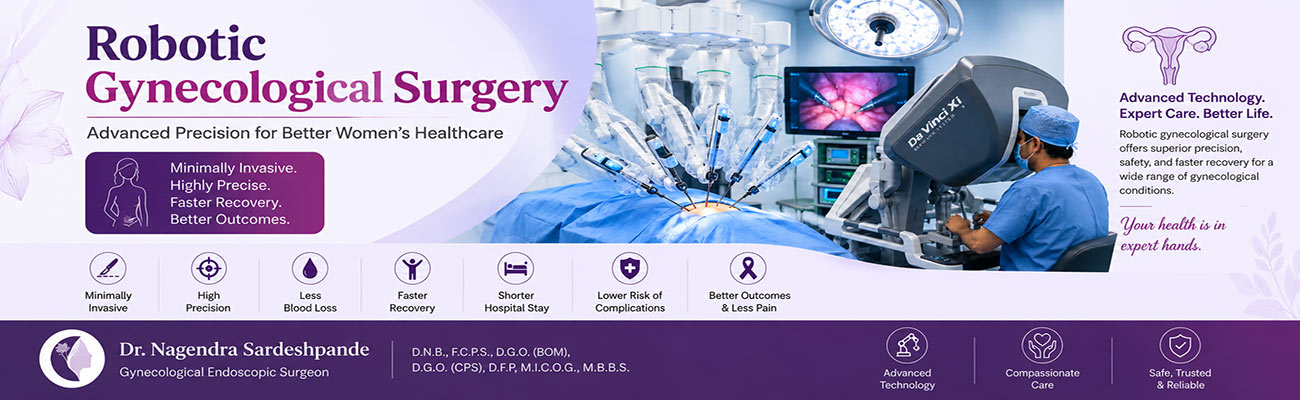
Robotic Gynecological Surgery: The Future of Women's Healthcare
Robotic gynecological surgery has revolutionized women's healthcare by offering a highly precise, minimally invasive approach to treating various gynecological conditions. With the assistance of advanced robotic technology, surgeons can perform complex procedures with enhanced accuracy, smaller incisions, reduced pain, and faster recovery compared to traditional open surgery.
This innovative surgical technique is an excellent option for women requiring treatment for benign gynecological disorders as well as certain gynecological cancers.
What is Robotic Gynecological Surgery?
Robotic gynecological surgery is a form of minimally invasive surgery in which the surgeon controls robotic arms from a sophisticated console. The robotic system translates the surgeon's hand movements into highly precise movements of miniature surgical instruments.
Contrary to common misconceptions, the robot does not perform the surgery independently. Every movement is completely controlled by an experienced gynecological surgeon.
The robotic system provides:
- High-definition 3D visualization
- Enhanced dexterity
- Tremor filtration
- Greater surgical precision
- Improved access to difficult anatomical areas
These features enable surgeons to perform delicate procedures with exceptional control.
Conditions Treated with Robotic Gynecological Surgery
Robotic-assisted surgery may be recommended for several gynecological conditions, including:
- Uterine Fibroids: Large or multiple fibroids can be removed with greater precision while preserving the uterus whenever possible.
- Endometriosis: Advanced robotic technology helps remove deep infiltrating endometriosis affecting the ovaries, bowel, bladder, and pelvic tissues.
- Ovarian Cysts: Complex ovarian cysts can often be removed while preserving healthy ovarian tissue.
- Adenomyosis: Selected women with severe adenomyosis may benefit from robotic-assisted hysterectomy or fertility-preserving surgery.
- Pelvic Organ Prolapse: Robotic surgery allows effective repair of prolapsed pelvic organs with improved anatomical restoration.
- Gynecological Cancers: Robotic surgery is increasingly used for endometrial cancer, early-stage cervical cancer, and selected ovarian cancers. It enables precise lymph node removal and cancer staging while minimizing surgical trauma.
Common Robotic Gynecological Procedures
- Robotic Hysterectomy: Removal of the uterus with minimal blood loss and faster recovery.
- Robotic Myomectomy: Removal of fibroids while preserving the uterus for women planning future pregnancies.
- Robotic Endometriosis Surgery: Comprehensive removal of endometriotic lesions with greater precision.
- Robotic Ovarian Surgery: Treatment of ovarian cysts and ovarian masses.
- Robotic Sacrocolpopexy and Hysteropexy: Effective treatment for vaginal vault and uterine prolapse.
- Robotic Cancer Surgery: Used for staging and treating several gynecological malignancies.
Advantages of Robotic Gynecological Surgery
- Smaller Incisions: Only a few tiny incisions are required, resulting in minimal scarring.
- Less Blood Loss: Enhanced precision helps reduce bleeding during surgery.
- Reduced Pain: Smaller incisions lead to less postoperative discomfort.
- Faster Recovery: Most patients recover more quickly and return to normal activities sooner.
- Shorter Hospital Stay: Many women can go home within 24 to 48 hours.
- Lower Infection Risk: Smaller wounds reduce the likelihood of surgical site infections.
- Better Surgical Precision: The robotic system offers greater flexibility than the human wrist, allowing surgeons to perform highly delicate procedures.
Who is a Good Candidate for Robotic Surgery?
You may be an ideal candidate if you have:
- Large uterine fibroids
- Severe endometriosis
- Heavy menstrual bleeding
- Chronic pelvic pain
- Pelvic organ prolapse
- Gynecological cancer requiring surgery
- A need for minimally invasive treatment
The final decision depends on your medical history, overall health, previous surgeries, and the complexity of your condition.
How to Prepare for Robotic Gynecological Surgery
Preparation usually includes:
- Complete medical evaluation and blood investigations
- Imaging studies and pre-anesthesia assessment
- Medication review
- Fasting before surgery
- Discussion regarding recovery expectations
Following your surgeon's instructions helps ensure the best surgical outcomes.
What Happens During the Procedure?
The surgery is performed under general anesthesia. The process typically involves:
- Small incisions are made in the abdomen.
- Robotic instruments are inserted.
- A high-definition camera provides a magnified view.
- The surgeon operates from the robotic console.
- Surgical instruments perform highly precise movements.
- The procedure is completed with minimal tissue trauma.
Depending on the complexity, surgery may take between two and five hours.
Recovery After Robotic Surgery
Recovery is generally faster than traditional open surgery. Most patients experience less pain, minimal blood loss, early walking after surgery, a short hospital stay, quicker return to work, and faster healing.
Many women resume normal daily activities within two to four weeks, although complete recovery may vary depending on the procedure performed.
Are There Any Risks?
Like all surgeries, robotic gynecological surgery carries some risks, including bleeding, infection, injury to nearby organs, blood clots, anesthesia-related complications, and rare conversion to open surgery. Choosing an experienced robotic gynecological surgeon significantly reduces these risks.
Why Robotic Surgery is Better Than Traditional Open Surgery
| Feature | Robotic Surgery | Open Surgery |
|---|---|---|
| Incisions | Small | Large |
| Pain | Less | More |
| Blood Loss | Minimal | Higher |
| Hospital Stay | 1-2 days | 4-7 days |
| Recovery Time | 2-4 weeks | 6-8 weeks |
| Cosmetic Results | Excellent | Larger scar |
| Infection Risk | Lower | Higher |
Frequently Asked Questions
Is robotic gynecological surgery safe?
Yes. When performed by a trained and experienced surgeon, robotic surgery is considered safe and offers excellent clinical outcomes.
Does the robot perform the surgery on its own?
No. The robotic system is completely controlled by the surgeon throughout the procedure.
Will there be visible scars?
Only tiny incisions are made, resulting in minimal scarring.
Is robotic surgery painful?
Most patients report significantly less pain than with traditional open surgery.
How soon can I return to work?
Many women return to office work within two to three weeks, depending on the type of surgery performed.
Can robotic surgery treat cancer?
Yes. Robotic-assisted surgery is widely used for selected gynecological cancers, particularly endometrial and early-stage cervical cancers.
Why Choose Robotic Gynecological Surgery?
Robotic-assisted surgery combines cutting-edge technology with surgical expertise to provide patients with safer, more precise, and less invasive treatment options. It is especially beneficial for women seeking faster recovery, reduced postoperative pain, minimal scarring, and excellent surgical outcomes.
Consulting an experienced gynecological surgeon is the first step toward determining whether robotic surgery is the right treatment option for your specific condition.
Conclusion
Robotic gynecological surgery represents a significant advancement in modern women's healthcare. By offering superior precision, enhanced visualization, smaller incisions, and quicker recovery, it has become an increasingly preferred treatment option for a wide range of gynecological conditions.
If you are considering surgical treatment for a gynecological condition, speak with a qualified robotic gynecological surgeon to explore the most appropriate treatment plan tailored to your individual needs.